Horizon 2020 Differences – Artistic Research in the European Union ‘EU4ART_differences’
Project-Nr.: GA 101016460
A.RE DAYS #1 | Approximating Borders Artistic Research in Practice
YouTube
A.RE DAYS #1 | Approximating Borders Artistic Research in PracticeHorizon 2020 Differences – Artistic Research in the European Union ‘EU4ART_differences’
Project-Nr.: GA 101016460
Project title: Differences – Artistic Research in the European Union ‘EU4ART_differences’
Project number: GA 101016460
EU4ART_differences is a Horizon2020 funded project on Artistic Research (AR) that advances the research culture, academic excellence, and cooperation of its partner institutions from the field of Fine Arts.
EU4ART_differences is part of EU4ART, an Erasmus+ funded European University Alliance of four partner institutions—Accademia di Belle Arti di Roma (ABAROMA) https://abaroma.it/ Hochschule für Bildende Künste Dresden (HfBK) https://www.hfbk-dresden.de/ Latvijas Mākslas Akadēmija Riga (LMA) https://www.lma.lv/ and Magyar Képzőművészeti Egyetem Budapest (MKE) https://www.mke.hu/
Official website of the project: https://differences.eu4art.eu/
The implementation period of the project: 01.01.2021 – 31.12.2023.
Project coordinator: Hochschule für Bildende Künste (HfBK)
The ‘maximum grant amount’ of the consortium is: 1 999 997.52 €
Grant amount of the Hungarian University of Fine Arts: 449 831.27 €
This project has received funding from the European Union’s Horizon 2020 research and innovation programme under grant agreement No 101016460.
DIFFERENCES – Artistic Research in the European Union
EU4Art_differences was a joint research project carried out by four leading European higher education institutions in the arts: the Hungarian University of Fine Arts (HUFA), the Hochschule für Bildende Künste Dresden (HfBK), the Accademia di Belle Arti di Roma (ABARoma), and the Art Academy of Latvia (LMA). The project ran from 1 January 2021 to 31 December 2023. It strengthened collaboration among European higher education institutions in the arts while promoting and integrating diverse methodologies and practices of artistic research into university curricula.
The research project was organised into five work packages:
- WP1 – Project Management (HfBK)
- WP2 – Fine Arts Lab Establishment (HUFA)
- WP3 – R&I Agenda and Transfer to Citizens & Society (HfBK)
- WP4 – The Creative Eco-System (ABARoma)
- WP5 – Dissemination & Sustainability (LMA)
The Hungarian University of Fine Arts coordinated WP2 – Fine Arts Lab Establishment. Within this work package, the research team focused on the theoretical foundations of artistic research, the mapping of research laboratories and best practices, a comparative analysis of intellectual property regulations, and issues related to human resources.
At the beginning of the project, we examined how knowledge is transferred within art universities, investigating the teaching methods and educational practices used to communicate the diverse methodologies of artistic research. The institutional similarities identified through this research, as well as any anomalies or differences, were shared and discussed with our international partners.
We also mapped the intellectual property regulations and practices of the participating institutions and examined the rights and obligations of researchers involved in the creation of intellectual property within the higher education systems of the four participating countries. Based on the findings, we developed recommendations for EU4Art institutions concerning the possible harmonisation of intellectual property regulations.
In addition, we collected information on the databases and systems used by each partner institution to evaluate academic staff and researchers, including performance evaluation and feedback mechanisms, promotion systems, publication support, career planning, career development programmes, and opportunities for external funding. The objective of this survey was to gain a better understanding of university evaluation systems for academic staff and to identify and exchange examples of good practice.
One of the project's principal objectives was for each participating institution to establish its own LAB (Laboratory) as a framework for interpreting the concept of artistic research and exploring its organisational, research, and development potential. While working collaboratively, each partner developed its own LAB concept independently, reflecting its local context and institutional traditions.
The Hungarian University of Fine Arts established its LAB as a discursive space where individual research conducted by students, doctoral candidates, and faculty members could be shared, creating opportunities for collaboration across disciplinary boundaries. By involving external partners, these collaborations have the potential to generate broader cultural and societal impact.
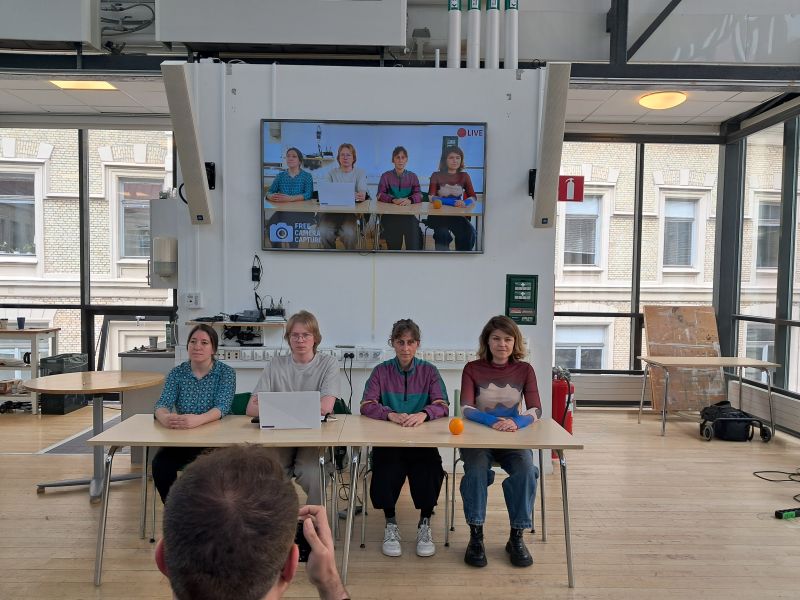
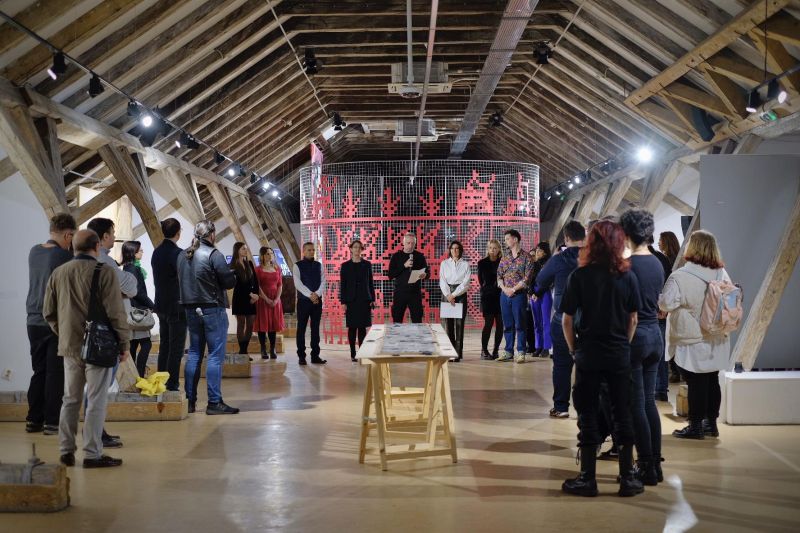
Following the successful LAB pilot event held on 15 November 2022, the project partners presented the concepts and activities of their LABs at a press conference in Budapest on 23 March 2023. The event also provided an opportunity for visitors to experience several examples of student artistic research projects conducted at HUFA. On this occasion, the publication Labification – Metaphor or Practice was launched, presenting and comparing the LAB concepts developed by the project partners.
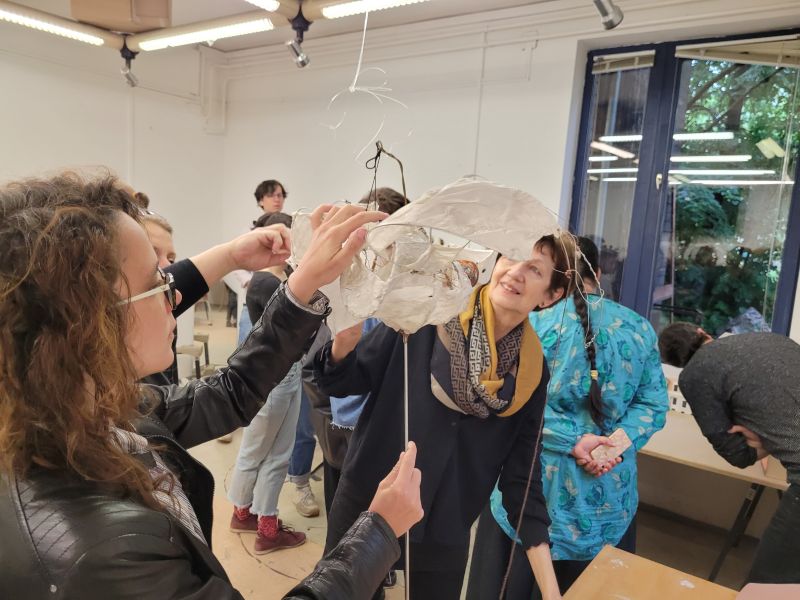
During 2023, HUFA organised three additional LAB workshops. These seminars shifted the focus from artistic research as a subject to research methodologies, particularly discursive and narrative approaches, which were examined within the context of collective knowledge production.
As part of the project, the Hungarian University of Fine Arts produced two important publications dedicated to the field of artistic research.
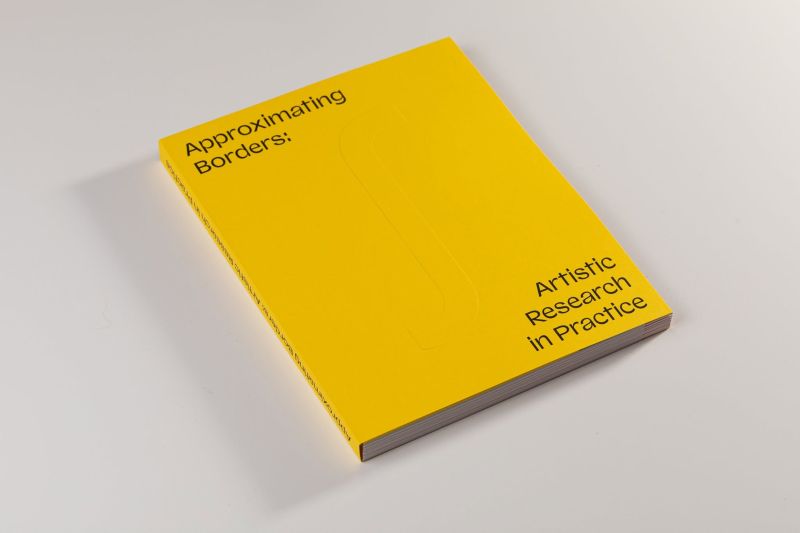
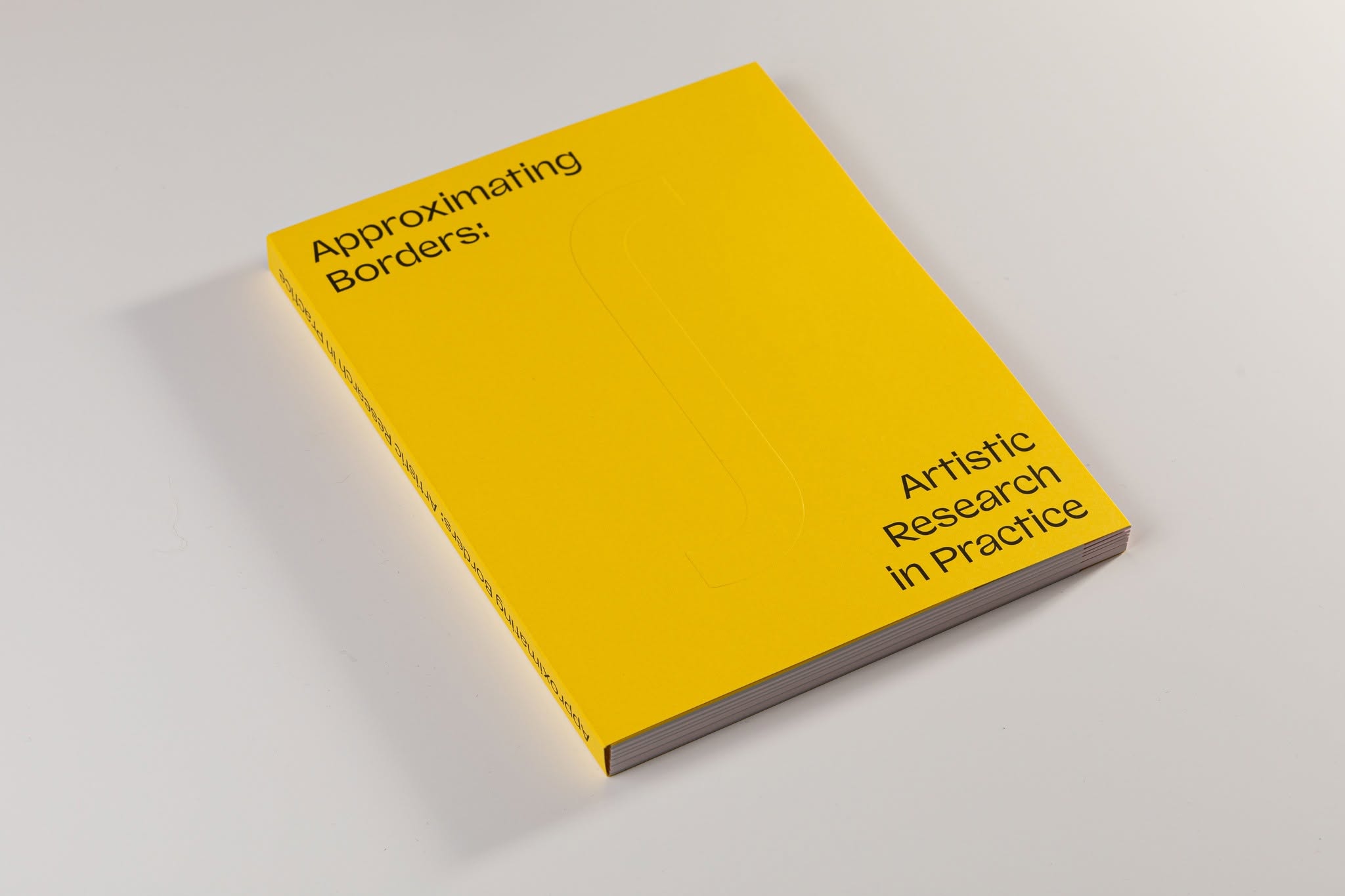
In collaboration with the project partners, the English-language volume Approximating Borders: Artistic Research in Practice was published. The book features contributions by visual artists, artists, and artist collectives who consistently integrate artistic research into their creative practice and teaching within higher arts education. Through the presentation of selected artworks and creative processes, the contributors provide insight into their research methodologies.
The publication focuses on a wide range of artistic research methods, illustrating practical research processes through both scholarly texts and rich visual material. The 225-page volume contains three main categories of texts. The central section consists of artistic contributions, in which contemporary artists present the research processes underpinning their creative work. A second category comprises short theoretical essays, referred to as "inserts," written by scholars who discuss artistic research from historical and theoretical perspectives, addressing topics such as the relationship between artistic research and education, institutional infrastructures, and the need to respond to developments in higher education. The third category includes interviews with artists, offering an external perspective on the relationship between artistic practice and research. Although the publication is primarily intended for undergraduate students preparing their final projects and doctoral candidates engaged in artistic research, it is equally valuable for anyone interested in the connections between artistic creation and research.
Alongside this volume, a Hungarian-language reader entitled Theory and Scholarship in Artistic Practice – A Reader on Artistic Research was also published. This collection brings together key historical and contemporary texts on artistic research, including Hungarian translations of writings by leading scholars and artists. Containing more than twenty texts, the volume also introduces readers to the most significant European Union policy documents and declarations relating to artistic research. Its primary aim is to provide Hungarian students with access to essential written sources in the field of artistic research.